Set:17
Sample Size:194,416 ranked games
Tier:SILVER
Last Updated:
5.94
Avg Placement
0.00%
First Place Rate
22.22%
Top 4 Rate
0.25%
Pick Rate

This comp averages a 5.94 placement with a 22.2% top 4 rate and a 0.0% first place rate across 194,416 ranked games. A 0.2% pick rate makes this a less contested composition.

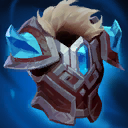
Oracle / Replicator / Rogue / Brawler / Timebreaker / Vanguard / Space Groove / Party Animal builds: Blitzcrank with Bloodthirster, Morellonomicon, Void Staff (100.00% WR, +77.78% difference); Gwen with Adaptive Helm, Crownguard, Thief's Gloves (100.00% WR, +77.78% difference); Nami with Radiant Nashor's Tooth, Jeweled Gauntlet, Nashor's Tooth (100.00% WR, +77.78% difference)
Blitzcrank
Blitzcrank
100.00%
Win Rate
+77.78%
Difference
Gwen
Gwen
100.00%
Win Rate
+77.78%
Difference
This comp has Very Low contested risk and is almost never contested and very easy to collect. The most contested units are Blitzcrank, Nami, Riven due to their popularity and high cost. You should have no trouble hitting these units.
Nasus is a 1-cost unit with an optimal reroll level of 4. Gwen and Pantheon are 2-cost units with an optimal reroll level of 6. Ornn is a 3-cost unit with an optimal reroll level of 7. Nami, Riven and Tahm Kench are 4-cost units with an optimal reroll level of 10. Blitzcrank is a 5-cost unit with an optimal reroll level of 10.
    • Nasus
      Nasus
    Gold cost icon1 Cost

    Reroll Lvl: Level 4

    • Gwen
      Gwen
    • Pantheon
      Pantheon
    Gold cost icon2 Cost

    Reroll Lvl: Level 6

    • Ornn
      Ornn
    Gold cost icon3 Cost

    Reroll Lvl: Level 7

    • Nami
      Nami
    • Riven
      Riven
    • Tahm Kench
      Tahm Kench
    Gold cost icon4 Cost

    Reroll Lvl: Level 10

    • Blitzcrank
      Blitzcrank
    Gold cost icon5 Cost

    Reroll Lvl: Level 10

Strategy Guide

Vertical Space Groove
Low Contest
Flexible Start
Hold For BiS Items
Moderate Flexibility
Win Condition
Vertical Space Groove - maximize Space Groove trait for synergy bonuses.
Economy
Medium Cost comp (75g investment). Play strongest board, pivot based on items and units hit.
Items
Best-in-slot items add +77.8% win rate - hold components.
Carousel Priority
Needlessly Large Rod and Sparring Gloves.
Augment Synergies
Look for Space Groove trait augments.

This is the suggested positioning for the champions in this TFT team comp. Positioning is based on the roles of the units.

Upgrade priority guide showing win rates and pick rates for Nasus, Gwen, Pantheon, Ornn, Nami, Riven, Tahm Kench, Blitzcrank at 1-star, 2-star, and 3-star levels. Use this data to decide which units to prioritize upgrading and when to reroll for 3-star units. Nasus has the highest 2-star win rate at 30.8%.
Top 5 items by win rate for each champion. Nasus's best item is Steadfast Heart with a 71.4% win rate. Gwen's best item is Thief's Gloves with a 72.7% win rate. Pantheon's best item is Protector's Vow with a 54.8% win rate. Ornn's best item is Dragon's Claw with a 62.5% win rate. Nami's best item is Void Staff with a 74.2% win rate. Riven's best item is Thief's Gloves with a 78.4% win rate. Tahm Kench's best item is Warmog's Armor with a 63.7% win rate. Blitzcrank's best item is Ionic Spark with a 77.2% win rate. Items with low pick rates are excluded.
If contested, consider pivoting to Replicator / Rogue (8 shared units, 1.96 avg place), Party Animal / Dark Lady (5 shared units, 3.22 avg place), and Replicator / Rogue (8 shared units, 3.70 avg place).

Playstyle Analysis

Playstyle ArchetypeFortress

This composition prioritizes survivability above all else, aiming to outlast opponents through superior tankiness and sustain.

AggressionVery Defensive

This composition prioritizes survival and scaling over early aggression. Deals ~59 avg damage per game.

DurabilityVery Durable

Units in this comp are very durableunits survive significantly longer than average in fights.

Power SpikeMid Game

Oracle / Replicator / Rogue / Brawler / Timebreaker / Vanguard / Space Groove / Party Animal reaches full power in stages 4-5, aiming to close out before opponents scale. Games typically end around round 28.

Detailed Analysis

Oracle / Replicator / Rogue / Brawler / Timebreaker / Vanguard / Space Groove / Party Animal is classified as a Fortress composition in TFT Patch 16.8. With a 22.2% win rate and 5.94 average placement, this comp requires precise execution to succeed.

Damage Profile: This composition is very defensiveit prioritizes survival and scaling over early aggression. This defensive approach means you may lose some early fights, but you'll have more HP remaining when your comp comes online.

Game Phase Strategy: Balance your economy with board strength to stay healthy while scaling into your mid-game power spike.

Stage-by-Stage Guide

Understanding when to level, roll, and transition is crucial for maximizing your success with Oracle / Replicator / Rogue / Brawler / Timebreaker / Vanguard / Space Groove / Party Animal. This guide breaks down the optimal play pattern for each stage of the game.

Stage 2Early Game
Level to 4
Win streak if strong
Build early board

Build the strongest board possible with your available units. Nasus and Gwen are good early game options. Level to 4 at Stage 2-1 or 2-2. Win streak if strong, or loss streak cleanly if weak.

Stage 3Transition
Level to 6 at 3-2
Roll to stabilize if low HP
Start collecting core units

At Stage 3-2, level to 6 and roll down to stabilize if your board is weak (below 70 HP). Otherwise, save gold and level to 7 at Stage 4-1. Start collecting your key units: Nasus, Gwen, Pantheon.

Stage 4Power Spike
Level to 7 at 4-1
Roll for 2-star core units
Push to 8 at 4-5/5-1

At Stage 4-1, level to 7 and roll for your core 2-stars. Look for Ornn, Nami, Riven. At Stage 4-5 or 5-1, push to level 8 and roll for 2-star Nami and Riven. This is when the comp reaches full power.

Stage 5+Late Game
Push to level 9 if healthy
Find final upgrades
Position against remaining players

Look to push to level 9 if you have gold and HP remaining. At level 9, search for Blitzcrank to complete your board.Scout the remaining players and adjust positioning to counter their carries.

Economy Summary
75gTotal Cost
HighInvestment

Maintain interest thresholds when possible, and avoid panic rolling unless your HP is critically low.

Full Written Guide

Stage 2: Early Game

Build the strongest board possible with your available units. Nasus and Gwen are good early game options. Level to 4 at Stage 2-1 or 2-2. Win streak if strong, or loss streak cleanly if weak.

Stage 3: Transition

At Stage 3-2, level to 6 and roll down to stabilize if your board is weak (below 70 HP). Otherwise, save gold and level to 7 at Stage 4-1. Start collecting your key units: Nasus, Gwen, Pantheon.

Stage 4: Power Spike

At Stage 4-1, level to 7 and roll for your core 2-stars. Look for Ornn, Nami, Riven. At Stage 4-5 or 5-1, push to level 8 and roll for 2-star Nami and Riven. This is when the comp reaches full power.

Stage 5+: Late Game

Look to push to level 9 if you have gold and HP remaining. At level 9, search for Blitzcrank to complete your board.Scout the remaining players and adjust positioning to counter their carries.

Player Damage Analysis

Damage ProfileSpread Damage

Multiple units survive and contribute player damage. This makes the comp resilient — losing one unit doesn't cripple your damage.

#1
Blitzcrank
Blitzcrank Contributor
13.8%
#2
Nami
Nami Contributor
13.6%
#3
Riven
Riven Contributor
13.0%
#4
Tahm Kench
Tahm Kench Contributor
12.3%
#5
Gwen
Gwen Contributor
12.2%
#6
Ornn
Ornn Contributor
12.0%
#7
Nasus
Nasus Contributor
11.9%
#8
Pantheon
Pantheon Contributor
11.2%

Key Takeaways

Resilient comp
— damage is spread, so losing one unit won't cripple you
Flexible positioning
— focus on overall board survival rather than protecting one unit
Full Damage Breakdown

Top Survivor:: Blitzcrank contributes 13.8% of total player damage. This unit reliably survives to deal player damage, though other units also contribute meaningfully.

Other Key Survivors:: Nami (13.6%), Riven (13.0%). These units also survive fights consistently and contribute to your player damage total.

Positioning Tip:: Your damage is spread across multiple units, so you're less reliant on any single unit surviving. This gives you more flexibility in positioning.

When to Play Oracle / Replicator / Rogue / Brawler / Timebreaker / Vanguard / Space Groove / Party Animal

Oracle / Replicator / Rogue / Brawler / Timebreaker / Vanguard / Space Groove / Party Animal is a SILVER tier composition in TFT Set 17 with a 22.2% win rate and 5.94 average placement. This comp focuses on the Space Groove trait.

Strengths

  • Strong trait synergies across multiple activated traits
  • Balanced composition with clear win conditions

Weaknesses

  • Below average 22.2% win rate requires optimal execution
  • Higher 5.94 average placement indicates inconsistency

Strategic Tips

1

Economy Strategy

Level efficiently to find your key carries at higher levels.

2

Itemization

Prioritize items for your main carry. Check the Top Items section for optimal builds.

3

Positioning

Place Tahm Kench and Ornn in the frontline to protect carries in the backline. Use the positioning board above as a guide.

Get the MetaBot Desktop App

Level up your gameplay with real-time overlays, automatic game detection, and instant stats — all on your desktop.

In-game overlaysAuto game detectionMulti-game supportPersonal dashboard
Download NowFree download
🔍

Help us maintain accuracy! If you notice incorrect stats, missing data, or any issues, your feedback directly improves the quality of our data for the entire community.

Report an Issue

F Oracle / Replicator / Rogue / Brawler / Timebreaker / Vanguard / Space Groove / Party Animal TFT Comp - Frequently Asked Questions

What traits does this comp use?

This composition uses the following traits: Oracle, Replicator, Rogue, Brawler, Timebreaker, Vanguard, Space Groove, Party Animal. The primary trait is Space Groove, which is active on 5 units.

What are the carries of this TFT Comp?

The primary carries for this composition are .

What is the best positioning for this composition?

Place your carries in the backline and your tanks like Tahm Kench and Ornn in the frontline to absorb damage. Check the positioning board above for exact placement.

Is this composition good in the current meta?

This composition has a win rate of 22.22% and an average placement of 5.94, making it a strong contender in the current meta.

What item builds does Oracle / Replicator / Rogue / Brawler / Timebreaker / Vanguard / Space Groove / Party Animal use?

Oracle / Replicator / Rogue / Brawler / Timebreaker / Vanguard / Space Groove / Party Animal performs best with these item builds: Blitzcrank with Bloodthirster, Morellonomicon, Void Staff (100.00% win rate, +77.78% difference from comp average); Gwen with Adaptive Helm, Crownguard, Thief's Gloves (100.00% win rate, +77.78% difference from comp average); Nami with Radiant Nashor's Tooth, Jeweled Gauntlet, Nashor's Tooth (100.00% win rate, +77.78% difference from comp average).

Is Oracle / Replicator / Rogue / Brawler / Timebreaker / Vanguard / Space Groove / Party Animal contested in TFT Set 17?

Oracle / Replicator / Rogue / Brawler / Timebreaker / Vanguard / Space Groove / Party Animal is relatively uncontested with only a 0.2% pick rate, making it a good choice when you want to avoid fighting for units. You can often hit your key champions like your carries without much competition.

What is the win condition for Oracle / Replicator / Rogue / Brawler / Timebreaker / Vanguard / Space Groove / Party Animal?

The win condition for Oracle / Replicator / Rogue / Brawler / Timebreaker / Vanguard / Space Groove / Party Animal is "Vertical Space Groove". This composition focuses on maximizing the Space Groove trait with 5 units, providing strong synergy bonuses. Position your carries safely and itemize them properly for maximum damage output.

Should I reroll or level with Oracle / Replicator / Rogue / Brawler / Timebreaker / Vanguard / Space Groove / Party Animal?

No, Oracle / Replicator / Rogue / Brawler / Timebreaker / Vanguard / Space Groove / Party Animal is not a reroll composition. Instead, focus on leveling efficiently to find your key units at higher levels. Stabilize at level 8 with 2-star units before pushing to level 9.

How much gold does Oracle / Replicator / Rogue / Brawler / Timebreaker / Vanguard / Space Groove / Party Animal cost to build?

Oracle / Replicator / Rogue / Brawler / Timebreaker / Vanguard / Space Groove / Party Animal is a medium cost composition requiring approximately 75 gold investment to complete. Balance your economy between leveling and rolling. Maintain interest thresholds while staying healthy on HP.

What are the best pivot options for Oracle / Replicator / Rogue / Brawler / Timebreaker / Vanguard / Space Groove / Party Animal?

Oracle / Replicator / Rogue / Brawler / Timebreaker / Vanguard / Space Groove / Party Animal is moderately flexible with 3 pivot options available. The best pivot options share key units like Blitzcrank and Nami. If you're contested, look at similar compositions that use these same champions with different supporting units.

When should I pivot away from Oracle / Replicator / Rogue / Brawler / Timebreaker / Vanguard / Space Groove / Party Animal?

You should consider pivoting away from Oracle / Replicator / Rogue / Brawler / Timebreaker / Vanguard / Space Groove / Party Animal if: (1) you see 2+ players contesting your key units in the early game, (2) you're not hitting your core champions by stage 3-2, or (3) you find stronger units for an alternative comp. The best pivot is Replicator / Rogue with a 95.9% win rate. Scout your lobby at stage 2-1 and 3-2 to decide. Check the Pivot Suggestions section above for 3 alternative compositions.