- Win Rate
- 50.0%
- Matches
- 4
- KDA
- 1.66
Hush vs Viper Matchups
- Patch
- 13.10
- Matches Analyzed
- 5,477
- Region
- All Regions
- Rank
- All Ranks
- Platform
- All Platforms
- Mode
- Competitive
- Last Updated
- Nov 22, 2026 UTC
- Author
- Dakota Chinnick
- Methodology
- Data Methodology
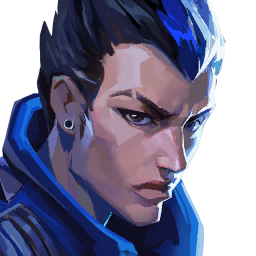
Hush vs Viper head-to-head analysis. Hush holds a 50.0% win rate in this competitive matchup. With 4 games analyzed, discover the key stats—KDA, damage per round, and side-specific performance—that separate winners from losers.
Hush Matchup Breakdown
Select an opposing agent to view detailed head-to-head statistics. Compare Hush's performance in terms of win rate, KDA, damage output, headshot percentage, and attack/defense effectiveness — all based on real competitive Valorant match data.


Who Wins the Hush vs Viper Matchup?
Hush vs Viper Performance Breakdown
In the Hush vs Viper matchup, Hush demonstrates complete superiority across all four key performance categories. Based on 4 analyzed matches, Hush outperforms Viper in fragging efficiency, damage output, and both attack and defense win rates. This comprehensive advantage makes Hush the statistically favored pick when facing Viper in ranked Valorant matches.
Hush vs Viper Matchup Summary
The Hush vs Viper matchup in Valorant is a dominant matchup where one agent significantly outperforms. Based on 4 competitive matches analyzed, Hush wins 50.0% of the time compared to Viper's 25.0%, a 25.0 percentage point difference. The most significant gap is in headshot accuracy, where Viper consistently outperforms. In this Duelist vs Controller matchup, Hush has overwhelming superiority in this agent matchup. Viper should never take isolated fights against Hush and must rely entirely on team coordination, utility, and crossfires to compete effectively.
Hush vs Viper Fragging Analysis

Hush edges out Viper in a competitive fragging comparison, winning 3 of 5 metrics with notable advantages in KDA efficiency, kill production, damage output. With only a 3-2 margin based on 4 matches analyzed, this Hush vs Viper matchup remains contestable for both sides. Viper shouldn't feel outgunned — the statistical gap is narrow enough that individual skill, positioning choices, and in-game decision making can easily swing specific encounters in Viper's favor.
Hush vs Viper Attack and Defense Performance
 61.0%
 48.1%51.9%39.0%
Attack Side Breakdown
The attack-side performance gap between Hush and Viper is dramatic: 61.0% versus 48.1%, a commanding 12.8 percentage point advantage. Hush dominates offensive scenarios in this matchup to a degree that requires Viper to fundamentally change their approach to attack-side play.
Our analysis of 4 competitive matches reveals Hush has overwhelming attack-side superiority in every measurable category. Site executions, entry success, post-plant conversion, and mid-round adaptability all massively favor Hush. This isn't a gap that Viper can overcome through practice or "playing better" — it's a structural matchup disadvantage. Viper teams must build their entire attack strategy around protecting Viper from direct Hush engagement: give Viper lurk roles, put them in trade positions rather than entry, and design executes where Viper's weaknesses are covered by teammate utility.
Under no circumstances should Viper take entry duels against Hush. The 12.8% attack gap makes entry fragging against Hush one of the lowest-percentage plays in Valorant. Viper must exclusively play support roles on attack: flash for teammates, smoke for executes, trade after entries, or create map pressure through lurks that don't involve Hush confrontation. Hush should actively hunt Viper entries, knowing the statistical advantage is overwhelming.
Viper's post-plant conversion rate against Hush is catastrophic. The data shows Viper fails to hold spike plants at a dramatically higher rate than Hush. Never leave Viper alone post-plant — they need constant teammate support, crossfire setups, and utility coordination to have any chance of winning these scenarios. Consider not planting at all if Viper is the only survivor. Hush should play extremely confidently in post-plants, knowing Viper struggles to convert even favorable positions.
Defense Side Breakdown
The defensive disparity between Hush and Viper is substantial: 51.9% versus 39.0%, a 12.8 point chasm. Hush absolutely dominates CT side in this matchup — their site holds are significantly harder to break, their retake contributions more impactful, and their defensive utility more effective at every level.
Viper cannot be trusted with traditional site anchor responsibilities against Hush. The 12.8% defensive gap is too large to overcome through positioning or individual skill. Teams must protect Viper: pair them with multiple teammates, give them off-site lurk positions, or have them rotate immediately when Hush's presence is identified on their site. Hush should aggressively anchor the most difficult sites on any map, knowing their defensive capability is overwhelming.
Viper should avoid retake scenarios against Hush entirely when possible. The data from 4 matches shows Viper's retake conversion rate against Hush is dramatically lower than average. If Viper must retake, require 3+ player numbers advantage and full utility coordination. Hush should play post-plant positions knowing Viper lacks the capability to effectively contest them. In clutch scenarios, Hush wins at overwhelming rates.
Economy decisions for Viper must account for their defensive inadequacy. Force buying against Hush is essentially throwing away credits — the defensive gap makes partial buys nearly unwinnable. Viper should always advocate for full saves, building toward rounds where team utility can compensate for their individual defensive weakness. Hush can confidently force and half-buy, knowing their defensive advantages persist across all economy states.
Overall Side Analysis
Hush demonstrates commanding superiority on both attack (61.0%) and defense (51.9%), comprehensively outperforming Viper across all phases of the game. Based on our analysis of 4 competitive matches, this is one of the more one-sided agent matchups in Valorant, with Hush holding advantages at every stage.
Map selection and team composition cannot fix Viper's disadvantage in this matchup. Hush outperforms across all map types and team structures. If you're playing Viper into Hush, your team composition needs to compensate heavily: strong fragging agents to carry Viper's weight, utility-heavy supports to cover their positioning, and coordination to avoid leaving Viper in isolated Hush encounters.
For ranked climbing, avoid playing Viper when you expect to face Hush frequently. The 25.7 combined percentage point disadvantage across both sides is too large to overcome through individual skill improvement. If Hush is meta in your rank bracket, strongly consider adding them to your agent pool or playing agents that have more neutral matchups.
Final verdict: Hush decisively wins the Hush vs Viper matchup. This isn't a skill check or a "play better" situation — Hush has systematic advantages that manifest across thousands of games. Viper players facing Hush should adjust expectations, play more supportively, and recognize that direct confrontations are statistically unfavorable at every stage of the game.
Duelist vs Controller Dynamics
The Duelist (Hush) vs Controller (Viper) dynamic creates asymmetric encounters where each agent brings fundamentally different tools to engagements. Hush's Duelist abilities serve different purposes than Viper's Controller kit, meaning direct fights often feature non-equivalent utility exchanges.
Understanding how Duelist abilities interact with Controller counterplay is essential for maximizing your agent's potential. Hush's Duelist toolkit may excel at certain aspects while Viper's Controller kit counters others. The Hush advantage suggests their role's capabilities translate better to winning these cross-role encounters on average.
Build the Perfect Team Comp
Assemble both teams in Comp Lab, pick a map, and see role balance, per-agent map fit, and matchup edges — all computed from real competitive matches before the round starts.
- Full 5v5 comp builder
- Per-agent map fit & win rates
- Matchup edges vs enemy picks

Across 0 head-to-head games, Hush wins 50.0% on average. Treat rows with fewer than 100 games as rough: a handful of games can swing a win rate by ten points. No opponent moves Hush's win rate beyond normal variation yet.
Opponent | Win Rate | Matches | KDA | DMG/Rnd | HS % | Atk WR | Def WR |
|---|---|---|---|---|---|---|---|
| 47.62% | 84 | 1.33 | 145.6 | 31.6% | 48.3% | 51.5% | |
| 56.96% | 79 | 1.37 | 145.2 | 31.5% | 52.3% | 52.1% | |
| 50.94% | 53 | 1.33 | 139.0 | 31.0% | 55.6% | 47.6% | |
| 46.15% | 52 | 1.33 | 144.5 | 31.5% | 49.5% | 49.6% | |
| 36.73% | 49 | 1.30 | 140.7 | 31.6% | 44.6% | 48.5% | |
| 64.44% | 45 | 1.35 | 138.0 | 31.1% | 49.7% | 55.8% | |
| 44.00% | 25 | 1.51 | 155.5 | 30.5% | 51.0% | 54.3% | |
| 29.17% | 24 | 1.22 | 144.5 | 33.4% | 39.9% | 48.8% | |
| 57.89% | 19 | 1.42 | 150.1 | 30.4% | 50.3% | 54.9% | |
| 57.89% | 19 | 1.36 | 151.3 | 31.0% | 49.7% | 53.8% | |
| 72.22% | 18 | 1.46 | 152.9 | 31.2% | 55.0% | 57.4% | |
| 64.71% | 17 | 1.51 | 153.6 | 29.5% | 46.2% | 64.1% | |
| 56.25% | 16 | 1.19 | 134.7 | 32.7% | 55.1% | 46.0% | |
| 55.56% | 9 | 1.40 | 142.3 | 40.2% | 45.9% | 54.3% | |
| 62.50% | 8 | 1.61 | 164.3 | 30.5% | 45.9% | 60.9% | |
| 42.86% | 7 | 1.16 | 133.4 | 33.1% | 53.5% | 42.9% | |
| 33.33% | 6 | 1.10 | 123.7 | 27.5% | 50.0% | 42.1% | |
| 50.00% | 6 | 1.73 | 203.1 | 29.8% | 47.5% | 57.8% | |
| 50.00% | 4 | 1.39 | 140.6 | 28.5% | 52.0% | 47.9% | |
| 50.00% | 4 | 1.66 | 164.6 | 22.3% | 61.0% | 51.9% | |
| 75.00% | 4 | 1.24 | 123.9 | 32.3% | 48.3% | 61.4% |


Help us maintain accuracy! If you notice incorrect stats, missing data, or any issues, your feedback directly improves the quality of our data for the entire community.
Frequently Asked Questions
What is Hush's best matchup in Valorant?
None stands out yet: across 0 head-to-head games, no opponent's gap from Hush's 50.0% average is larger than normal variation.
What is Hush's hardest matchup?
None stands out yet: across 0 head-to-head games, no opponent's gap from Hush's 50.0% average is larger than normal variation.