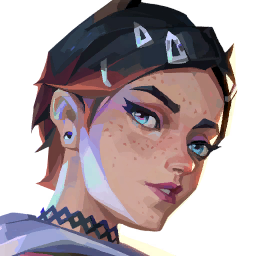
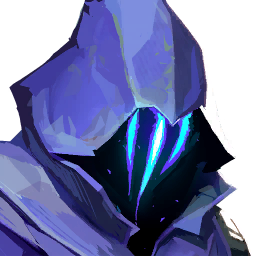
Omen vs FadeMatchups
Omen vs Fade head-to-head analysis. Omen holds a 50.7% win rate in this competitive matchup. With 138 games analyzed, discover the key stats—KDA, damage per round, and side-specific performance—that separate winners from losers.
Omen Matchup Breakdown
Select an opposing agent to view detailed head-to-head statistics. Compare Omen's performance in terms of win rate, KDA, damage output, headshot percentage, and attack/defense effectiveness — all based on real competitive Valorant match data.

Who Wins the Omen vs Fade Matchup?
Omen vs Fade Performance Breakdown
The Omen vs Fade matchup is closely contested, with each agent winning 2 of 4 key metrics across 138 analyzed games. Both agents bring competitive strengths to this duel, making individual skill and team composition crucial factors in determining round outcomes.
Omen vs Fade Matchup Summary
The Omen vs Fade matchup in Valorant is a moderately favorable matchup. Based on 138 competitive matches analyzed, Omen wins 50.7% of the time compared to Fade's 47.1%, a 3.6 percentage point difference. The most significant gap is in fragging ability, where Omen consistently outperforms. In this Controller vs Initiator matchup, Omen has meaningful advantages in this agent head-to-head. Fade players should avoid isolated duels when possible and rely on team utility and trading to overcome the statistical disadvantage.
Omen vs Fade Fragging Analysis

Omen claims 4 out of 5 fragging metrics in the Omen vs Fade matchup, establishing clear mechanical superiority with advantages in KDA efficiency, kill production, damage output. Our analysis of 138 ranked games reveals Omen consistently outperforms Fade in direct combat scenarios. While Fade manages to win the remaining metric, the overall picture favors Omen in gunfights. Fade players should play around their one strength while minimizing exposure in areas where Omen dominates.
Omen vs Fade Attack and Defense Performance
 46.8%
46.8% 48.3%51.7%53.2%
Attack Side Breakdown
Fade demonstrates a modest attack-side advantage over Omen in this matchup, converting 48.3% of attacking rounds versus 46.8%. While this 1.5 point edge gives Fade slightly better site-taking capability, the gap remains narrow enough that skilled Omen players can overcome it through superior execution and team play.
The data from 138 competitive games suggests Fade's kit provides marginally better tools for attack-side scenarios. This could manifest as slightly more effective entry utility, better post-plant stalling, or superior mid-round adaptability. However, Omen teams shouldn't dramatically alter their attacking approach — instead, focus on tightening execute timing, coordinating utility chains more precisely, and ensuring trades are happening when entries fail. Small improvements in team coordination can easily overcome a 1.5% gap.
When taking entry duels, Fade holds a slight statistical advantage but nothing that should change fundamental approach. Omen players should still take confident entries when they have good information or utility support. The key adjustment is ensuring you're not taking unnecessary 50-50 duels — look for angles where you have an advantage through utility, information, or teammate support. Fade can play slightly more aggressively on entries, knowing the statistics marginally favor them.
In post-plant situations, Fade's slight advantage likely stems from better utility for denying defuses or controlling retake angles. Omen should compensate by being more deliberate about post-plant positioning — take spots that offer escape routes or trade potential rather than hero plays. Stack post-plants with teammates when possible, and use utility efficiently to maximize delay time. The 1.5 point gap can be neutralized through smart post-plant fundamentals.
Defense Side Breakdown
Fade shows slightly better defensive capabilities than Omen, winning 53.2% of defense rounds compared to 51.7%. This 1.5 percentage point edge suggests Fade's kit provides marginally better tools for CT-side play, though the gap remains small enough for skilled Omen players to overcome.
When deciding site assignments, Fade can slightly more confidently take solo anchor roles. Their 1.5% defensive advantage likely stems from better stalling utility, superior information gathering, or more effective site-holding positions. Omen should consider pairing with a teammate on their site rather than solo anchoring, or taking positions that allow early rotates rather than committing to extended holds. The advantage is small but worth considering in close games.
Fade demonstrates marginally better retake capability in this matchup. Whether through superior clearing utility, better post-plant positioning, or stronger clutch mechanics, Fade converts retakes at a slightly higher rate. Omen should focus on retaking with numbers — don't take hero 1v1 retakes against Fade when you can wait for teammates. Fade can be slightly more confident in isolated retake situations, knowing the statistics marginally favor them.
On eco and force buy rounds, the 1.5% gap becomes more pronounced as utility advantages compound. Omen should be more conservative with eco aggression against Fade and prioritize saving for full buys where team utility can compensate for individual disadvantages. Fade can play slightly more aggressively on force buys, knowing their defensive kit provides small but meaningful advantages even with limited economy.
Overall Side Analysis
Fade holds clear advantages on both attack (48.3%) and defense (53.2%), establishing themselves as the superior choice in the Omen vs Fade matchup regardless of map side. This consistency across both halves means Fade doesn't need to play for specific sides or rely on winning a particular half to succeed.
Fade's advantage holds across all map types and team compositions. Whether on attack-sided, defense-sided, or balanced maps, Fade performs better. Omen teams should consider compositions that can cover their weaknesses — pair Omen with strong fragging agents who can carry during their difficult matchup encounters, and ensure utility supports Omen's positioning.
For ranked climbing specifically, Fade is the objectively better pick in this matchup. If you're equally comfortable on both agents and frequently face this matchup, practicing Fade provides a measurable ranked advantage. Omen players should focus on team play, utility value, and avoiding direct Fade confrontations rather than trying to outfrag them.
The verdict is clear: Fade wins this matchup on both sides of the map. The combined 3.1 percentage point advantage across attack and defense represents a meaningful statistical edge. Omen isn't unplayable, but faces an uphill battle requiring stronger team support and more disciplined play to compete.
Controller vs Initiator Dynamics
The Controller (Omen) vs Initiator (Fade) dynamic creates asymmetric encounters where each agent brings fundamentally different tools to engagements. Omen's Controller abilities serve different purposes than Fade's Initiator kit, meaning direct fights often feature non-equivalent utility exchanges.
Understanding how Controller abilities interact with Initiator counterplay is essential for maximizing your agent's potential. Omen's Controller toolkit may excel at certain aspects while Fade's Initiator kit counters others. The Fade advantage suggests their role's capabilities translate better to winning these cross-role encounters on average.
Build the Perfect Team Comp
Assemble both teams in Comp Lab, pick a map, and see role balance, per-agent map fit, and matchup edges — all computed from real competitive matches before the round starts.
- Full 5v5 comp builder
- Per-agent map fit & win rates
- Matchup edges vs enemy picks

Omen has favorable matchups against 11 agents and unfavorable matchups against 17 agents in Valorant. Omen's strongest matchup is against Gekko with a 75.0% win rate. The most challenging matchup is Harbor at 16.7% win rate. Use the table below to find specific matchup details and performance metrics.
Opponent | Win Rate | Matches | KDA | DMG/Rnd | HS % | Atk WR | Def WR |
|---|---|---|---|---|---|---|---|
| 47.21% | 341 | 1.55 | 131.4 | 31.9% | 46.8% | 51.0% | |
| 49.12% | 340 | 1.60 | 134.7 | 31.8% | 48.1% | 51.6% | |
| 50.00% | 244 | 1.55 | 133.0 | 30.6% | 48.6% | 51.2% | |
| 46.15% | 208 | 1.60 | 137.3 | 30.5% | 48.0% | 50.9% | |
| 47.62% | 147 | 1.57 | 134.1 | 30.8% | 46.1% | 52.3% | |
| 50.72% | 138 | 1.60 | 132.5 | 30.3% | 46.8% | 51.7% | |
| 43.80% | 137 | 1.53 | 133.6 | 29.4% | 49.8% | 47.1% | |
| 56.20% | 121 | 1.67 | 134.5 | 31.1% | 50.6% | 53.4% | |
| 48.18% | 110 | 1.56 | 134.7 | 30.2% | 48.4% | 51.4% | |
| 42.55% | 94 | 1.56 | 131.4 | 32.9% | 45.3% | 50.8% | |
| 51.69% | 89 | 1.66 | 136.7 | 32.3% | 46.0% | 54.9% | |
| 46.34% | 82 | 1.55 | 127.6 | 28.9% | 48.7% | 49.3% | |
| 56.76% | 74 | 1.54 | 133.0 | 29.7% | 47.0% | 54.9% | |
| 49.32% | 73 | 1.70 | 139.4 | 31.2% | 48.8% | 51.8% | |
| 49.06% | 53 | 1.48 | 126.6 | 29.2% | 47.2% | 52.0% | |
| 53.85% | 39 | 1.63 | 143.1 | 33.6% | 49.4% | 51.6% | |
| 40.00% | 35 | 1.65 | 139.0 | 30.1% | 44.5% | 51.1% | |
| 34.62% | 26 | 1.33 | 127.7 | 31.4% | 48.8% | 42.6% | |
| 26.09% | 23 | 1.54 | 137.3 | 31.5% | 47.6% | 41.0% | |
| 44.44% | 18 | 1.79 | 132.5 | 29.9% | 46.5% | 56.3% | |
| 58.82% | 17 | 1.78 | 143.5 | 34.7% | 54.5% | 53.9% | |
| 56.25% | 16 | 1.58 | 125.7 | 31.8% | 45.0% | 52.1% | |
| 64.29% | 14 | 1.65 | 140.0 | 31.8% | 60.4% | 48.6% | |
| 45.45% | 11 | 1.47 | 144.0 | 33.6% | 47.9% | 50.0% | |
| 57.14% | 7 | 1.37 | 128.0 | 34.6% | 47.9% | 49.4% | |
| 42.86% | 7 | 1.59 | 130.4 | 31.1% | 45.6% | 53.8% | |
| 16.67% | 6 | 1.62 | 139.9 | 31.9% | 37.3% | 47.8% | |
| 75.00% | 4 | 1.59 | 110.2 | 30.4% | 41.7% | 60.4% |


Help us maintain accuracy! If you notice incorrect stats, missing data, or any issues, your feedback directly improves the quality of our data for the entire community.
Frequently Asked Questions
What is Omen's best matchup in Valorant?
Omen's best matchup is against Gekko, achieving a 75.0% win rate. Omen excels in this matchup through superior fragging ability and favorable utility interactions.
What is Omen's hardest matchup?
Omen's hardest matchup is against Harbor, with only a 16.7% win rate. Against this opponent, Omen should focus on team coordination and utility usage to compensate.
How many favorable matchups does Omen have?
Omen has 11 favorable matchups (50%+ win rate) and 17 unfavorable matchups in Valorant. Understanding these matchup dynamics helps you make better agent picks and adapt your playstyle.
How should I play Omen in difficult matchups?
When playing Omen in difficult matchups, prioritize team coordination, utility usage, and crossfires. Avoid isolated 1v1 duels against unfavorable opponents and look for opportunities to use Omen's abilities to create advantages. Adjust your positioning based on whether you're on attack or defense.
What stats matter most in Omen's matchups?
Key stats to analyze in Omen's matchups include win rate, KDA ratio, average damage per round, and attack/defense win rates. High damage matchups favor aggressive play, while low KDA matchups suggest playing more supportively and relying on team trades.